Our team in Canada offers an expansive menu of engineering and analysis, industrial inspections, non-destructive testing (NDT) services and one-stop-shop capabilities that save customers time and trouble.

June 1, 2011

Why Use Oil Analysis to Detect Water Contamination?

Water is one of the most destructive contaminants of oil. Water attacks additives, generates oxidation and modifies the vapor pressure of oil; it corrodes metal surfaces, facilitates emulsions, blocks filters and hinders in the formation of the protective film. Water increases dramatically the corrosive potential of acids present in oil. In diesel engines, light contamination is normal, however, critical to certain hydraulic equipment and compressors. Severe contamination deserves close attention and will seldom be suppressed with an oil change.
March 1, 2011

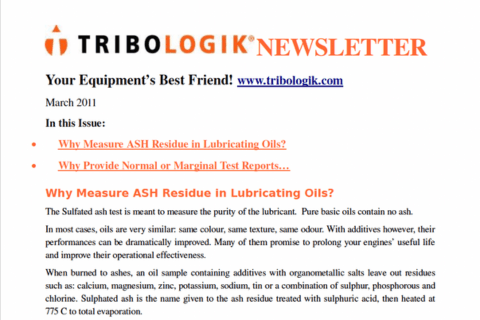
Using Oil Analysis to Measure Ash Residue in Lubricating Oil

The Sulfated ash test is meant to measure the purity of the lubricant. Pure basic oils contain no ash. In most cases, oils are very similar: same color, same texture, same odour. With additives however, their performances can be dramatically improved. Many of them promise to prolong your engines’ useful life and improve their operational effectiveness.
July 25, 2003

Determining Competency in a Crane Inspector

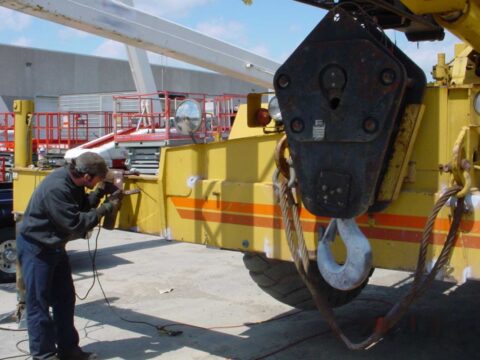
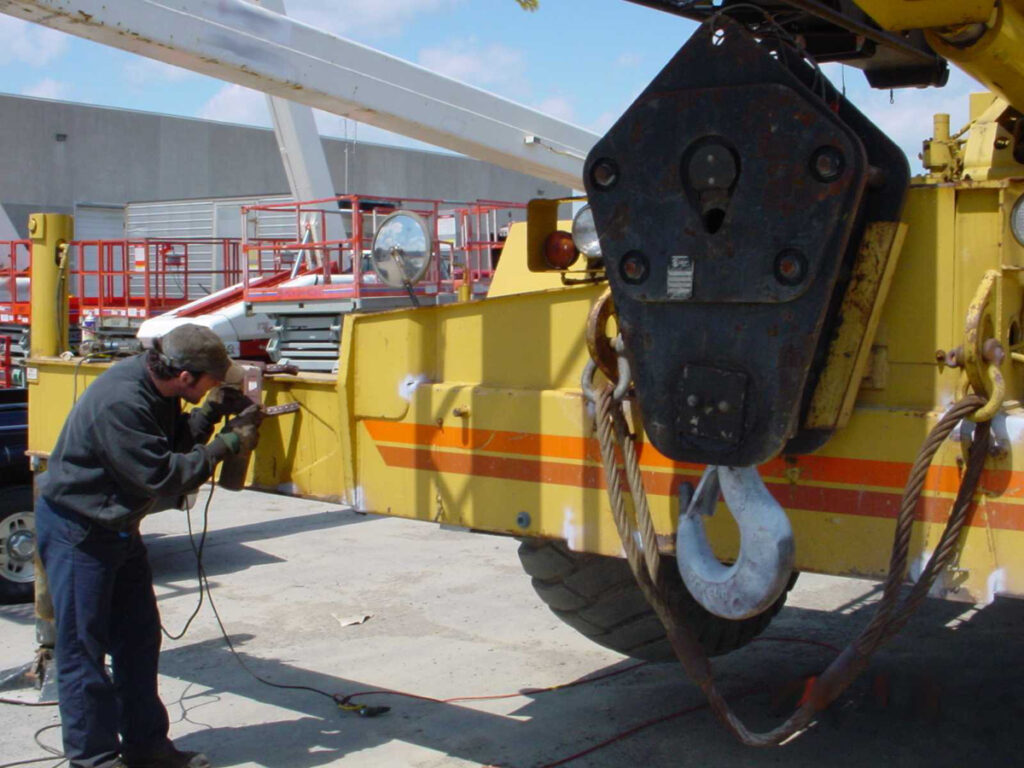
The Crane Rental Association of Canada (CRAC) put on a show in Ottawa for this year’s CRAC Conference spanning four days from May 29 to June 1, 2003. Over two hundred people representing Canada’s crane industry attended. The delegates were treated to a great round of golf at Eagle Creek Golf Course, dinner among a number of historic airplanes at the Aviation Museum, and some fantastic food and dancing on banquet night with a ten piece band supplying the rock ‘n’ roll.