
How Third-Party CMM Programming Helps Manufacturers Bypass Inspection Bottlenecks
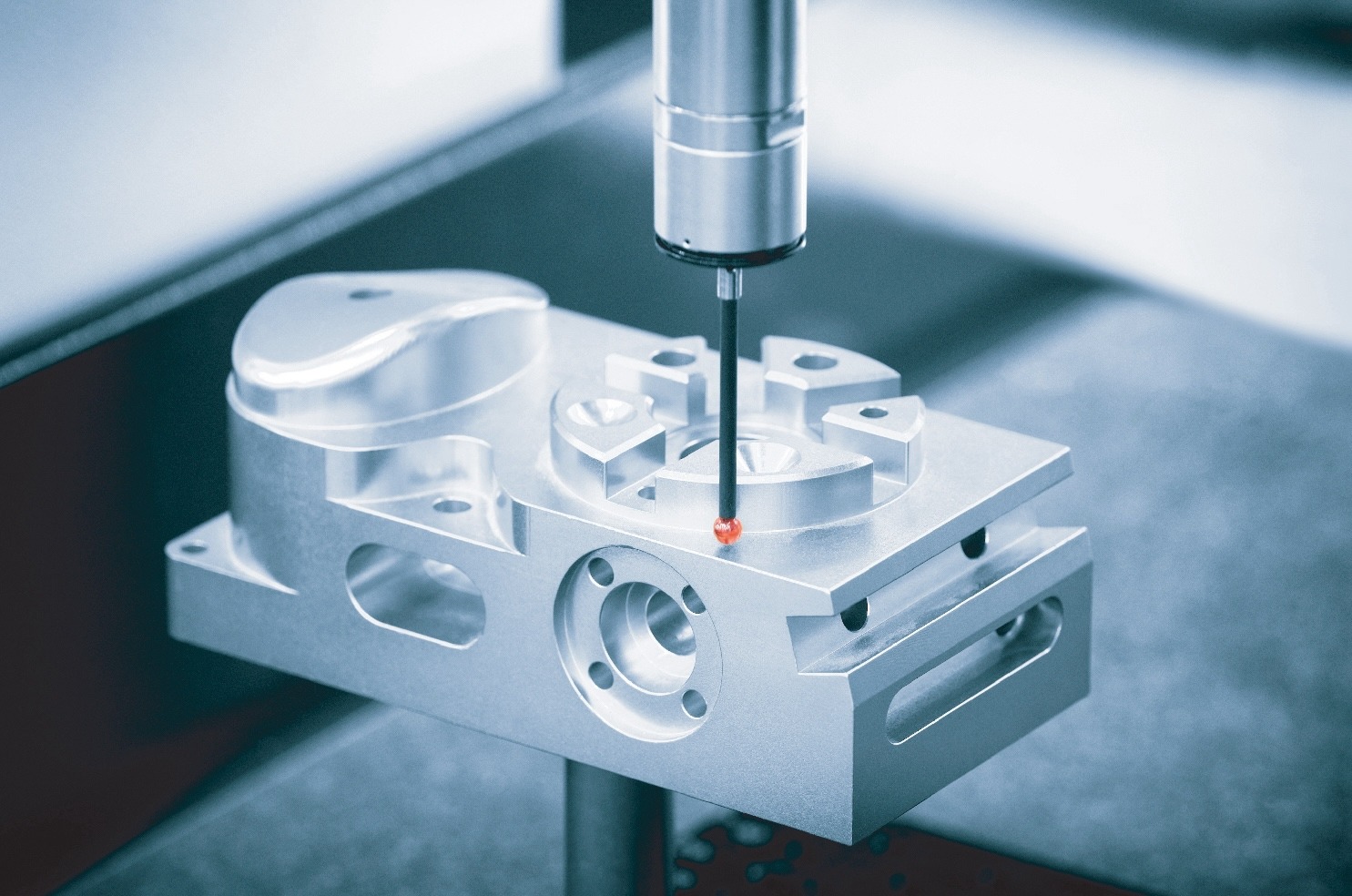
When a product rolls off the production line and into store shelves and supplier warehouses, buyers trust that they are purchasing a safe, quality product. Even small errors made during the product design process can later lead to costly redesigns, recalls, hazards or liability issues — not to mention the damage done to the manufacturer’s reputation.
Accurate measurements from a Coordinate Measuring Machine (CMM) helps to ensure that a product meets strict design specifications before it hits the market. And it all starts with programming of the CMM by a qualified professional.
What is CMM Programming?
As a first step in the inspection process, CMM programmers work closely with manufacturing engineers and quality control personnel to understand part specifications and identify key features that require precise measurement. Using CAD models or blueprints of the part, programmers create and perfect programs that provide step-by-step instructions to the CMM on how to measure part geometry.
A well-defined program provides a virtual map that instructs the CMM probe on which features to measure, number of data points to collect, measurement paths and sequences, and acceptable tolerances.
Online vs. Offline Programming
There are two common approaches to CMM programming, as described below.
Online Programming (Manual Teach Mode) is a hands-on approach in which the first inspection is done manually on the CMM. The operator manually moves the probe around the part and records critical points to “teach” the machine, point-by-point, what and where to measure. The CMM software records the steps and recreates them to automate future inspections of that part. Manufacturers often use online programming to measure prototypes and parts with simple designs.
As the name implies, Offline Programming does not require the actual CMM. Instead, it uses special software that creates a virtual CMM environment. Using CAD models of the part, the programmer defines what features to measure and how to go about doing it. Because it does not require an actual CMM, offline programming helps maximize CMM availability for inspections and avoid potential bottlenecks.
Benefits of Outsourcing CMM Programming
Even if a manufacturer has the knowledge, skill, and equipment to perform CMM programming in-house, there are a number of valid reasons to outsource CMM programming to a qualified third-party metrology lab.
SPEED: Writing and testing a program can be time-consuming. Outsourcing is a great option for manufacturers that prefer to devote their CMM time to production rather than programming. With numerous qualified team members and an arsenal of dimensional inspection equipment, third-party labs can typically offer faster turnaround times on both routine and rush jobs.
EXPERTISE: Complex part designs call for a deeper level of GD&T expertise — the kind you will only find at a dedicated metrology lab that lives and breathes dimensional inspection. The diverse, industry-spanning experience you will find at an independent metrology lab helps to streamline the inspection process and reduce measurement errors.
EQUIPMENT: An established independent lab will own a fleet of measurement equipment and multiple software platforms, and staff members know which to use on what job. By outsourcing CMM programming, a manufacturer gains instant access to a vast range of tools, equipment and experience — without the capital investment.
INDEPENDENCE: Some customers and industries require third-party inspection. In other cases, manufacturers may elect to partner with a third-party lab to ensure completely objective testing and an added measure of credibility to satisfy customer or supplier disputes, regulatory concerns, or legal issues. An independent, accredited lab provides unbiased methods, data, and documentation that stand up to scrutiny.
FLEXIBILITY: Even if you have an in-house metrology lab, there will be times your team is stretched too thin due to employee turnover, vacations, or increasing production demands.
An independent metrology lab can bridge staffing gaps, in the short or long term. Outsourcing means that customers pay only for the services they need and have the flexibility to quickly scale up or down as needed to meet changing demands.
When to Use In-House vs. Outsourcing
| Considerations | In-House | Outsource |
|---|---|---|
| If you regularly measure a high volume of parts | X | |
| If you frequently revise programs | X | |
| If you need to retain inspection expertise internally | X | |
| If you require more direct oversight | X | |
| If your project calls for specialized expertise | X | |
| If you need a fast turnaround | X | |
| If it’s a one-time or low-volume job | X | |
| If your CMM is busy with production | X | |
| If independence is important | X |
Many manufacturers use a hybrid strategy to get the best of both in-house and outsourced programming. A hybrid approach allows companies to build internal skills, while reducing risk and long-term costs.
Why Choose IIA?
The ISO-accredited metrology labs at Industrial Inspection & Analysis (IIA) provide expert programming and inspection using a wide variety of CMM equipment. Our trained and certified programmers are proficient in all leading CMM software platforms and have an in-depth understanding of GD&T principles, fixturing and alignment strategies, blueprint reading, and measurement uncertainty. Our team can help you automate and streamline the inspection process and ensure consistent measurement, regardless of volume.
Particularly when dealing with new or complex parts, tight tolerances, high stakes, or limited in-house capacity, third-party CMM programming outshines other options. When you partner with IIA, you’ll receive fast, friendly service and the technical know-how you need to bring quality products to life.


