
Reverse Engineering of Medical Devices: When Custom Fit is Critical
There are times in life when “good enough” isn’t good enough — only a perfect fit will do.
Perhaps nowhere is a custom fit more critical than in the world of medicine, where tailored medical devices and implants can have a huge impact on a patient’s quality of life.
Uniquely Challenging
In more traditional scenarios, two manufactured components can be designed to fit together. The challenge in the medical field is that customized parts and devices must be made to fit and function within the unique contours, angles and asymmetries of the human body.
Today’s leading medical manufacturers increasingly use reverse engineering to create one-of-a-kind medical devices as unique as the person using them.
How It Works
Reverse engineering is the process of taking something physical — in this context, a patient’s anatomy — and working backward to solve a problem.
The first step in the reverse engineering process is obtaining highly accurate, dense dimensional data of the object, anatomy, or surface in question. Today’s advanced dimensional inspection tools, such as 3D scanners and coordinate measuring machines (CMMs), allow for precision measurement of even the most complex geometries.
That dimensional data is then converted into a detailed 3D model — a digital “twin” of real-world geometry. Using that realistic model of an individual’s anatomy, engineers can bring designs to life that fit comfortably, perform well, and work naturally with the user’s body or environment.
In medical device manufacturing, even a miniscule mistake in dimensional measurement can hinder a product’s performance, longevity, and stability — not to mention causing pain and discomfort for the patient. Imagine, for example, trying to dig into your favorite meal with ill-fitting dentures or get from point A to point B on a wobbly prosthetic leg.
Examples That Inspire
Here are a few examples of the medical marvels made possible by reverse engineering:
- Prosthetics: Scanning of residual limb shape and pressure points paves the way for a highly customized socket, offering greater comfort and mobility for individuals using prosthetic limbs.
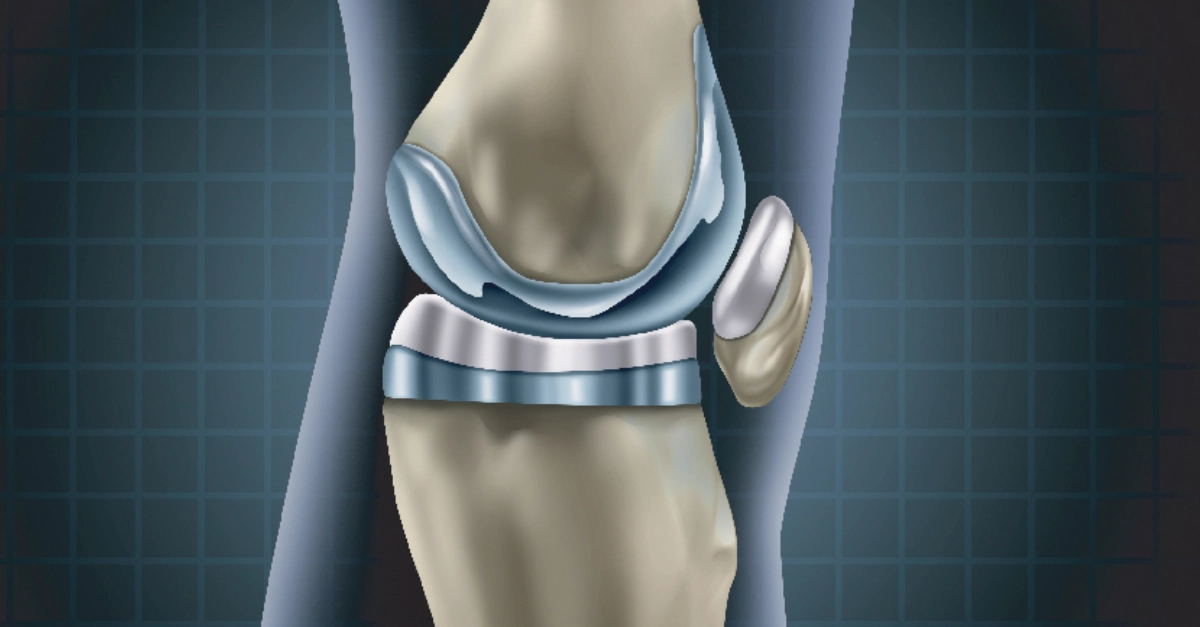
- Customized Orthopedic Implants: In situations where standard models will not work, hip, knee and shoulder joint replacements can be tailored using 3D reconstructions of a patient’s bones.
- Skull Repair: After brain tumor removal or a traumatic head injury, cranial and maxillofacial implants can be designed to match the patient’s original anatomy, allowing for nearly seamless skull reconstruction.
- Dental Implants & Prosthetics: Intraoral scanners can accurately map the inside of a patient’s mouth to reverse engineer crowns and bridges to match an individual’s unique tooth and gum geometry.
- Cardiovascular Devices: 3D imaging can be used to reconstruct a patient’s blood vessel geometries to aid in the customization of stents, heart valves, and vascular grafts.
- 3D-Printed Bone Scaffolds: In a field known as regenerative medicine, reverse engineering can be used to create porous structures that mimic natural bone, serving as a scaffold for bioactive materials or living cells to repair bone injuries or defects.
- Custom Hearing Implants & Ear Prostheses: 3D scanning and modeling help to ensure proper placement of cochlear implants and cosmetic realism of prosthetic ears.
Imaging data can also be used as a guide to help surgeons perform procedures with higher precision, and in the development of ergonomic products that match a user’s unique posture and reach.
Why Choose IIA?
With 40 years of meticulous metrology services, Industrial Inspection & Analysis (IIA) is a pioneer in the use of 3D scanning for reverse engineering, geometry recreation and 3D modeling. Across the U.S., our ISO-accredited labs use state-of-the-art measuring equipment, including both contact and vision machines, to deliver the precise data medical manufacturers depend on.
We are particularly proud to provide reverse engineering services that improve quality of life, such as the many projects we’ve supported in the medical industry. Over the years, our expertise in reverse engineering has allowed us to digitally reproduce casts and models to help medical manufacturers create custom-fitted dental implants and bone plates used with prosthetic limbs.
Beyond dimensional analysis, we offer a full range of laboratory testing to take reverse engineering to the next level — including mechanical, chemical, environmental, and material testing.
As our medical manufacturing customers have discovered, IIA is the perfect match when it comes to creating a custom fit.
Learn more about IIA’s 3D Laser Scanning and Reverse Engineering Services.
LEARN MORE
- IIA’s 3D Laser Scanning Helps Bring Vintage Boat Back to Life
- 3D Scanning for Reverse Engineering. Why Does it Matter?
- Reverse Engineering: When You Need to Get from Point B to Point A


