
OIL TESTS
Analytical Ferrography (AF)
Analytical Ferrography is one of the most effective and versatile tools to detect large wear particle (larger than 10 microns) analysis. The test can be performed on dissolved grease to visually determine the types and amount of wear particles. This test provides additional information on the mechanism, location and extent of wear and any contaminants.
API Gravity (GRA) - ASTM D1298
Analytical Ferrography is one of the most effective and versatile tools to detect large wear particle (larger than 10 microns) analysis. The test can be performed on dissolved grease to visually determine the types and amount of wear particles. This test provides additional information on the mechanism, location and extent of wear and any contaminants.
Chip Analysis (CH)
Analytical Ferrography is one of the most effective and versatile tools to detect large wear particle (larger than 10 microns) analysis. The test can be performed on dissolved grease to visually determine the types and amount of wear particles. This test provides additional information on the mechanism, location and extent of wear and any contaminants.
Copper Corrosion (CC) - ASTM D130
Copper Corrosion uses a strip tarnish test to detect copper corrosion from petroleum products on yellow metals. Copper Corrosion assesses the relative degree of corrosiveness of a petroleum product due to active sulfur compounds. Results are rated by comparing the stains on a copper strip to a color-match scale from 1a to 4c. This test is widely used on turbine, hydraulic and gear oils.
Color, Odor, Foam, etc. (COP)
Analytical Ferrography is one of the most effective and versatile tools to detect large wear particle (larger than 10 microns) analysis. The test can be performed on dissolved grease to visually determine the types and amount of wear particles. This test provides additional information on the mechanism, location and extent of wear and any contaminants.
Demulsibility (DEM) - ASTM D1401
This test method covers measurement of the ability of petroleum oils or synthetic fluids to separate from water. Developed specifically for steam-turbine oils, this method may also be used to test oils of other types.
Direct Reading (DR)
This test method covers measurement of the ability of petroleum oils or synthetic fluids to separate from water. Developed specifically for steam-turbine oils, this method may also be used to test oils of other types.
Evaporation (EV) - ASTM D5800
This test method covers the rapid determination of 22 elements in used and unused lubricating oils and base oils, and it provides rapid screening of used oils for indications of wear. When the predominant source of additive elements in used lubricating oils is the additive package, significant differences between the concentrations of the additive elements and their respective specifications can indicate that the incorrect oil is being used. The concentrations of wear metals can be indicative of abnormal wear if there are baseline concentration data for comparison. A marked increase in boron, sodium, or potassium levels can be indicative of contamination as a result of coolant leakage in the equipment. This test method can be used to monitor equipment condition and define when corrective actions are needed.
Evaporation of Lubrif. (Noack) (EVAL) - ASTM D5800
This test method covers measurement of the ability of petroleum oils or synthetic fluids to separate from water. Developed specifically for steam-turbine oils, this method may also be used to test oils of other types.
Ferrous Debris Mag./Grease (FDM) - GE Method
Ferrous Debris Monitor uses magnetometry to measure the wear metal particle contamination of an oil or grease sample and provides trendable parts per million (PPM) results, regardless of the size of the particles. Because its results are provided in PPM, FDM is regarded as an advanced PQ test. The latter indeed only shows them as a unitless index. FDM can be used to measure un-combined ferrous wear metal particle debris in oil or grease in a wide range of types of industrial and marine machinery.
Flash Point Closed Cup (CPFP) - D6450
The closed cup method determines flash point of fuels and liquids containing suspended solids and liquids that tend to form a surface film during testing. This method is extensively used in the transport industries and safety regulations for detection of contamination by volatile and flammable materials in fuel oils and for characterization of hazardous waste samples.
Flash Point Open Cup (FP) - ASTM D92
This test method covers measurement of the ability of petroleum oils or synthetic fluids to separate from water. Developed specifically for steam-turbine oils, this method may also be used to test oils of other types.
Foam (FOAM) - ASTM D892
This test method covers measurement of the ability of petroleum oils or synthetic fluids to separate from water. Developed specifically for steam-turbine oils, this method may also be used to test oils of other types.
Fourier Transform Infrared Analysis (FTIR) - JOAP
This test method covers measurement of the ability of petroleum oils or synthetic fluids to separate from water. Developed specifically for steam-turbine oils, this method may also be used to test oils of other types.
Fuel Dilution (FUH)
Fuel Dilution measures the relative percentage of unburned diesel or gasoline fuel present in an engine lubricant, which indicates maladjusted or malfunctioning fuel system assemblies. Excessive fuel dilution lowers lubricant load-carrying capacities, promotes lubricant breakdown, lowers viscosity, and increases the risk of fire or explosion.
Gas Chromatography Analysis (Glycol) (GCG) - ASTM D4291
Fuel Dilution measures the relative percentage of unburned diesel or gasoline fuel present in an engine lubricant, which indicates maladjusted or malfunctioning fuel system assemblies. Excessive fuel dilution lowers lubricant load-carrying capacities, promotes lubricant breakdown, lowers viscosity, and increases the risk of fire or explosion.
Glycol Test (Oil) (GLYO) - ASTM D2982
The Glycol Test determines the presence of ethylene glycol used in mineral based lubricating oils. A positive result is often associated with cooling system leaks, which will promote wear, corrosion, slugging and lubricant breakdown. If coolant additives or water contamination is present in the oil sample, a separate chemical test using reagents in tablet form is used to confirm ethylene glycol contamination.
Hot Plate (HP)
Fuel Dilution measures the relative percentage of unburned diesel or gasoline fuel present in an engine lubricant, which indicates maladjusted or malfunctioning fuel system assemblies. Excessive fuel dilution lowers lubricant load-carrying capacities, promotes lubricant breakdown, lowers viscosity, and increases the risk of fire or explosion.
ICP Spectrometric Analysis (SP) - D5185/D6130
Elemental Analysis by ICP (inductively coupled plasma) is applicable to lubricants, coolants, fuel and grease. Spectroscopy (as it often referred to) detects up to 23 elements that can be present in used fluids due to mechanical wear, contamination or additive depletion. Spectrometric analysis is an effective method for monitoring small particles. Severe wear particles larger than 6 microns cannot be detected accurately. Together with FTIR and Viscosity, ICP Spectroscopy figures amongst the basic tests always performed on each oil sample. Through its ability of detecting wear metal particles, Spectroscopy is effective in detecting not only the condition of the lubricant but also the condition of the equipment and its components. Wear metals include: iron, copper, lead, tin, chromium, aluminum, silver, nickel, magnesium, vanadium, titanium, cadmium, molybdenum and manganese. Contaminants include: silicon, boron, aluminum, sodium, and potassium. Additives include: lithium, phosphorous, zinc, calcium, barium, boron, sodium, molybdenum, magnesium, silicon and aluminum.
Karl Fischer Water Test (KF) - D6304/D4928
The Karl Fischer Water Titration Test is used for components and applications where water contamination can cause severe lubricant breakdown and must be kept extremely low. The Karl Fischer titration method measures and reports water content as a percentage (e.g. 0.005% = 50 ppm).
Dielectric strength (Transformer OIl) - ASTM D1816
The dielectric breakdown voltage of an insulating liquid measures the liquid's ability to withstand electric stress without failure. It indicates the presence of contaminating agents such as water, dirt, cellulosic fibers, or conducting particles in the liquid, one or more of which may be present in significant concentrations when low breakdown voltages are obtained. This test method covers the determination of the dielectric breakdown voltage of insulating liquids (oils of petroleum origin, silicone fluids, high fire-point mineral electrical insulating oils, synthetic ester fluids and natural ester fluids). It is applicable to insulating liquids commonly used in cables, transformers, oil circuit breakers, and similar apparatus as an insulating and cooling medium. Refer to Terminology D2864 for definitions used in this test method.
PCB (Transformer OIl) - ASTM D4059
The dielectric breakdown voltage of an insulating liquid measures the liquid's ability to withstand electric stress without failure. It indicates the presence of contaminating agents such as water, dirt, cellulosic fibers, or conducting particles in the liquid, one or more of which may be present in significant concentrations when low breakdown voltages are obtained. This test method covers the determination of the dielectric breakdown voltage of insulating liquids (oils of petroleum origin, silicone fluids, high fire-point mineral electrical insulating oils, synthetic ester fluids and natural ester fluids). It is applicable to insulating liquids commonly used in cables, transformers, oil circuit breakers, and similar apparatus as an insulating and cooling medium. Refer to Terminology D2864 for definitions used in this test method.
Water Content (Transformer oil) - ASTM D1533
The dielectric breakdown voltage of an insulating liquid measures the liquid's ability to withstand electric stress without failure. It indicates the presence of contaminating agents such as water, dirt, cellulosic fibers, or conducting particles in the liquid, one or more of which may be present in significant concentrations when low breakdown voltages are obtained. This test method covers the determination of the dielectric breakdown voltage of insulating liquids (oils of petroleum origin, silicone fluids, high fire-point mineral electrical insulating oils, synthetic ester fluids and natural ester fluids). It is applicable to insulating liquids commonly used in cables, transformers, oil circuit breakers, and similar apparatus as an insulating and cooling medium. Refer to Terminology D2864 for definitions used in this test method.
Particle Count (NAS) - NAS 1638
The National Aerospace Standards (NAS) are voluntary standards developed by the aerospace industry. This specification establishes the acceptance cleanliness limits of hydraulic fluid wetting internal surfaces of parts, assemblies, lines and fittings for use in hydraulic systems prior to storage and/or assembly.
Particle Count (PC) - ISO 4406
Particle Counting counts particle sizes greater than 4, 6, 14, 25, 50, and 100 symbol microns in size and are reported through the ISO Cleanliness Code, ISO 4406. If water is present at levels greater than 300 p.p.m., particle counting is unachievable. Particle counting is applicable to oil (PC) and fuel (PCF).
Particle Quantifier Index (PQ)
The particle quantifier index test measures the mass of ferrous wear debris in a sample and displays this as PQ index by Hall Effect regardless the particle size. PQ index is a unitless quantitative number and can be trended with acceptable linearity over a wide range of ferrous debris content and particle sizes. The larger the index the greater the ferrous wear content.
Patch Test (PT)
Particle Counting counts particle sizes greater than 4, 6, 14, 25, 50, and 100 symbol microns in size and are reported through the ISO Cleanliness Code, ISO 4406. If water is present at levels greater than 300 p.p.m., particle counting is unachievable. Particle counting is applicable to oil (PC) and fuel (PCF).
Pentane Insolubles (PI) - ASTM D4055
Pentane Insolubles are wear metal contaminants derived from the oxidation of resins, dust, soot and other similar materials. Coagulated pentane insolubles can plug oil filters, resulting in unfiltered oil circulating in the engine leading to piston deposits, bearing wear and engine failure.
Pour Point (PP) - ASTM D2500
The Pour Point is the lowest temperature at which a fuel or oil sample shows no movement when placed at a 90° angle to horizontal. The pour point is an important factor in engine startup and fuel/oil pumping during frigid temperatures.
Quantitative Spectrophotometric Analysis (QSA)
Particle Counting counts particle sizes greater than 4, 6, 14, 25, 50, and 100 symbol microns in size and are reported through the ISO Cleanliness Code, ISO 4406. If water is present at levels greater than 300 p.p.m., particle counting is unachievable. Particle counting is applicable to oil (PC) and fuel (PCF).
Rotating Pressure Vessel Oxidation Test (RPVOT) - ASTM D2272
Particle Counting counts particle sizes greater than 4, 6, 14, 25, 50, and 100 symbol microns in size and are reported through the ISO Cleanliness Code, ISO 4406. If water is present at levels greater than 300 p.p.m., particle counting is unachievable. Particle counting is applicable to oil (PC) and fuel (PCF).
RULER (RU)
Particle Counting counts particle sizes greater than 4, 6, 14, 25, 50, and 100 symbol microns in size and are reported through the ISO Cleanliness Code, ISO 4406. If water is present at levels greater than 300 p.p.m., particle counting is unachievable. Particle counting is applicable to oil (PC) and fuel (PCF).
Ruler (RUL) - ASTM D6971
Particle Counting counts particle sizes greater than 4, 6, 14, 25, 50, and 100 symbol microns in size and are reported through the ISO Cleanliness Code, ISO 4406. If water is present at levels greater than 300 p.p.m., particle counting is unachievable. Particle counting is applicable to oil (PC) and fuel (PCF).
Seta Flash Point Closed-Cup (SUSB) - ASTM D3828
Particle Counting counts particle sizes greater than 4, 6, 14, 25, 50, and 100 symbol microns in size and are reported through the ISO Cleanliness Code, ISO 4406. If water is present at levels greater than 300 p.p.m., particle counting is unachievable. Particle counting is applicable to oil (PC) and fuel (PCF).
Sulphated Ash (ASH) - ASTM D874
Particle Counting counts particle sizes greater than 4, 6, 14, 25, 50, and 100 symbol microns in size and are reported through the ISO Cleanliness Code, ISO 4406. If water is present at levels greater than 300 p.p.m., particle counting is unachievable. Particle counting is applicable to oil (PC) and fuel (PCF).
Total Acid Number (TAN) - ASTM D974
Particle Counting counts particle sizes greater than 4, 6, 14, 25, 50, and 100 symbol microns in size and are reported through the ISO Cleanliness Code, ISO 4406. If water is present at levels greater than 300 p.p.m., particle counting is unachievable. Particle counting is applicable to oil (PC) and fuel (PCF).
Total Base Number (TBN) - ASTM D2896
Particle Counting counts particle sizes greater than 4, 6, 14, 25, 50, and 100 symbol microns in size and are reported through the ISO Cleanliness Code, ISO 4406. If water is present at levels greater than 300 p.p.m., particle counting is unachievable. Particle counting is applicable to oil (PC) and fuel (PCF).
Varnish (QSA)
Particle Counting counts particle sizes greater than 4, 6, 14, 25, 50, and 100 symbol microns in size and are reported through the ISO Cleanliness Code, ISO 4406. If water is present at levels greater than 300 p.p.m., particle counting is unachievable. Particle counting is applicable to oil (PC) and fuel (PCF).
Viscosity at 40 °C (VIS40) - ISO 445
Particle Counting counts particle sizes greater than 4, 6, 14, 25, 50, and 100 symbol microns in size and are reported through the ISO Cleanliness Code, ISO 4406. If water is present at levels greater than 300 p.p.m., particle counting is unachievable. Particle counting is applicable to oil (PC) and fuel (PCF).
Viscosity at 100 °C (VIS100) - ISO 445
The Viscosity at 100 °C test measures the thickness of the oil at a high operating temperature. Viscosity, or oil weight, examines the thickness or thinness of the sample oil. The test measures the time for a volume of liquid to flow under gravity, determining the kinematic viscosity of oil at 100 °C, which is the operating temperature of the equipment. Together with FTIR and ICP Spectroscopy, Viscosity figures amongst the basic tests always performed on each oil sample.
Viscosity Index (VI) - ASTM D2270
Particle Counting counts particle sizes greater than 4, 6, 14, 25, 50, and 100 symbol microns in size and are reported through the ISO Cleanliness Code, ISO 4406. If water is present at levels greater than 300 p.p.m., particle counting is unachievable. Particle counting is applicable to oil (PC) and fuel (PCF).
Water Separation (WAT) - ASTM D1401
This test method provides a guide for determining the water separation characteristics of oils subject to water contamination and turbulence. Although developed specifically for steam-turbine oils having viscosities of 28.8 mm2/s to 90 mm2/s at 40 °C, this test method may be used to test oils of other types having various viscosities and synthetic fluids at other test temperatures.
Dissolved Gas Analysis (Transformer OIl) - ASTM D3612
This test method provides a guide for determining the water separation characteristics of oils subject to water contamination and turbulence. Although developed specifically for steam-turbine oils having viscosities of 28.8 mm2/s to 90 mm2/s at 40 °C, this test method may be used to test oils of other types having various viscosities and synthetic fluids at other test temperatures.
Furanic Compounds (Transformer OIl) - ASTM D5837
This test method provides a guide for determining the water separation characteristics of oils subject to water contamination and turbulence. Although developed specifically for steam-turbine oils having viscosities of 28.8 mm2/s to 90 mm2/s at 40 °C, this test method may be used to test oils of other types having various viscosities and synthetic fluids at other test temperatures.
Interfacial Tension (Transformer OIl) - ASTM D971
Interfacial tension measurements on electrical insulating liquids provide a sensitive means of detecting small amounts of soluble polar contaminants and products of oxidation. A high value for new mineral insulating oil indicates the absence of most undesirable polar contaminants. The test is frequently applied to service-aged mineral oils as an indication of the degree of deterioration.
Brochures
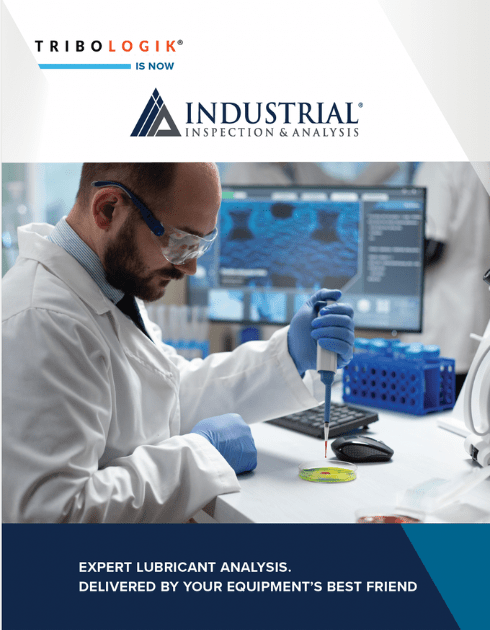
Tribologik® is now IIA Tribologik. Combined, we provide expert lubricant analysis to monitor equipment health in addition to comprehensive lab services, turnkey inspection services, and lift, crane and fire equipment inspection services.

Industrial Inspection & Analysis (IIA) has added Tribologik to our comprehensive services. As IIA Tribologik, we now provide expert lubricant analysis to monitor equipment health in addition to comprehensive lab services, turnkey
inspection services, and lift, crane and fire equipment inspection services.

Data centres rely on precision cooling to prevent downtime and protect assets worth millions of dollars. Specialized laboratory testing from Industrial Inspection & Analysis (IIA) provides the insights you need to maintain system efficiency, prevent corrosion, and extend equipment life.