
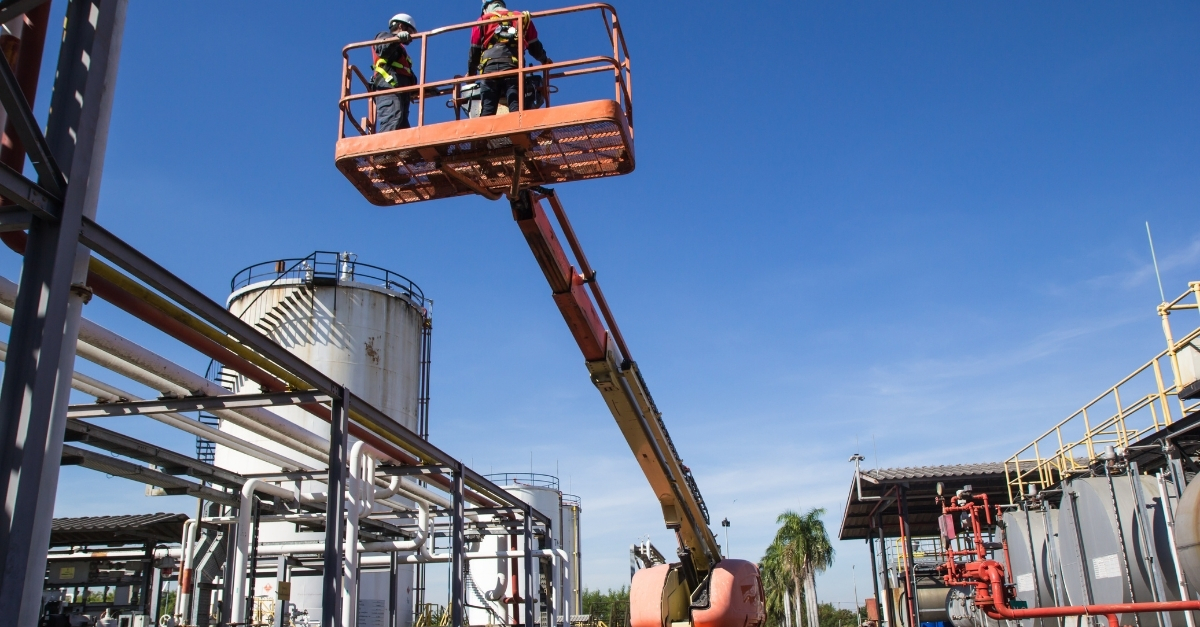
From single man-lifts to soaring tower cranes, lift equipment play a vital role in workplaces across Canada every day.
In addition to the everyday impacts of time and usage, Canadian winters take an added toll on lift equipment. For example, sub-zero temperatures can hinder hydraulic systems, reduce battery efficiency, and make steel components more susceptible to cracking. In addition, road salts and coastal environments can accelerate corrosion and lead to long-term durability issues.
Whatever their cause, if left unchecked, structural integrity issues can be catastrophic. Routine inspections of lift equipment help to ensure that issues are identified in the early stages to protect worker safety, minimize downtime, and comply with laws and regulations.
Regulatory Framework for Lift Inspections
In Canada, the design, inspection, maintenance, and safe use of aerial devices are governed by Canadian Standards Association (CSA) standards and Occupational Health and Safety (OHS) regulations.
Canada’s regulatory landscape varies by province and territory. However, regional OHS regulations that govern lift equipment inspection in each province or territory commonly reference or incorporate CSA standards for inspection intervals and criteria, operator training, and documentation. Regulations also may reference equipment manufacturer instructions and take into account the type of equipment, usage, and environment.
Typical inspection requirements for lift equipment include:
- Initial inspection by manufacturer, owner or installer before first use by the employer.
- Pre-shift or pre-use operational checks/visual inspection by equipment operator.
- Annual or periodic inspections (every 1-12 months) for a more comprehensive review of structural integrity and load capacity.
- Structural inspection may be required when equipment reaches a specific age and periodically thereafter.
- Re-inspection may be required after significant events, such as sale/transfer, accidents or significant modification to the equipment.
Examples of Lift Inspection Standards in Canada
| Type of Equipment | Applicable Standards & Regulations | Required Inspection |
|---|---|---|
| Bucket Trucks |
CSA C225 + Provincial OHS regulations or Canada Labour Code (for federally regulated industries) |
|
| Forklifts |
CSA B335 + Provincial OHS regulations or Canada Labour Code (for federally regulated industries) |
|
| Manlifts/Scissorlifts |
CSA B354 + Provincial OHS regulations or Canada Labour Code (for federally regulated industries) |
|
Best Practices for Safety & Compliance
While inspection requirements vary, these best practices will help you get a head start on compliance:
- Know and follow CSA, OHS and other regulations and standards governing lift equipment in your jurisdiction.
- Establish documented inspection programs based on manufacturer recommendations and CSA requirements.
- Understand and follow manufacturer’s recommendations for inspections, maintenance and safe use.
- Ensure operators are trained and qualified to perform their assigned inspections.
- Meticulously document all training, maintenance, and inspections and retain records in accordance with provincial regulations.
Benefits of Third-Party Lift Inspections
Laws and regulations generally require inspections to be performed by a “competent” or “qualified” person — someone with the knowledge, training, and experience to inspect equipment and identify hazards. When you partner with an experienced third-party inspection company, you can be sure that a trained and certified inspector is examining your equipment. A company that specializes in lift equipment inspection also delivers benefits in these areas:
SAFETY: A provider that specializes in lift inspections is able to accurately identify issues in the early stages to help prevent accidents and injuries down the road.
COSTS: A provider that specializes in lift equipment can quickly and accurately complete inspections, maximizing equipment reliability and reducing emergency repair costs.
COMPLIANCE: An experienced provider will have in-depth knowledge of all regulations and standards affecting your lift equipment to ensure compliance and reduce the risk of fines, penalties, and downtime.
FLEET PLANNING: A third-party inspection expert can help companies move from reactive maintenance into more proactive, long-term fleet management.
CONSISTENCY: For large companies with a wide geographic footprint, hiring a single inspection provider can help ensure that inspections are performed consistently across fleets and provinces.
INDEPENDENCE: An independent third-party inspection company provides reliable inspection data, detailed documentation, and objective recommendations that will stand up to scrutiny should an audit or legal dispute arise. Unbiased assessments help to demonstrate a company’s due diligence and could potentially reduce legal exposure.
Why Choose IIA/Kova Engineering?
Industrial Inspection & Analysis and our Canada-based Kova Engineering subsidiary have decades of experience providing on-site lift inspections to ensure the safety of equipment ranging from airline ground support equipment (GSE) to cranes to bucket and fire trucks. Our trained and certified inspection personnel perform hundreds of aerial lift structural inspections every year. We also offer fluid testing to help you monitor the condition of your fleet.
When lift equipment requires major repair or modification, regulations typically require work to be done in accordance with manufacturer’s specifications or specifications certified by a Professional Engineer (P.Eng.). Our Engineering Team can provide repair recommendations and post-repair inspection and certification to minimize equipment downtime and meet regulatory requirements. Our professional engineers can also assist with inspection planning, lift equipment design, lift planning and accident investigation.
Our inspections and certifications are backed by superior service, knowledge, record keeping, and unrivaled engineering expertise supported by more than 30 years of history as The Crane Certification Bureau™, which has set the standard for crane inspection and certification across Canada.
From cranes and lift equipment to other heavy machinery, we will work with you to safely extend the service life of your equipment and keep your company in compliance. When you need to ensure the safety and reliability of your lift equipment, elevate your expectations — choose IIA and Kova Engineering.


