
TCBs & FCBs Streamline Regulatory Approvals for Radio Equipment
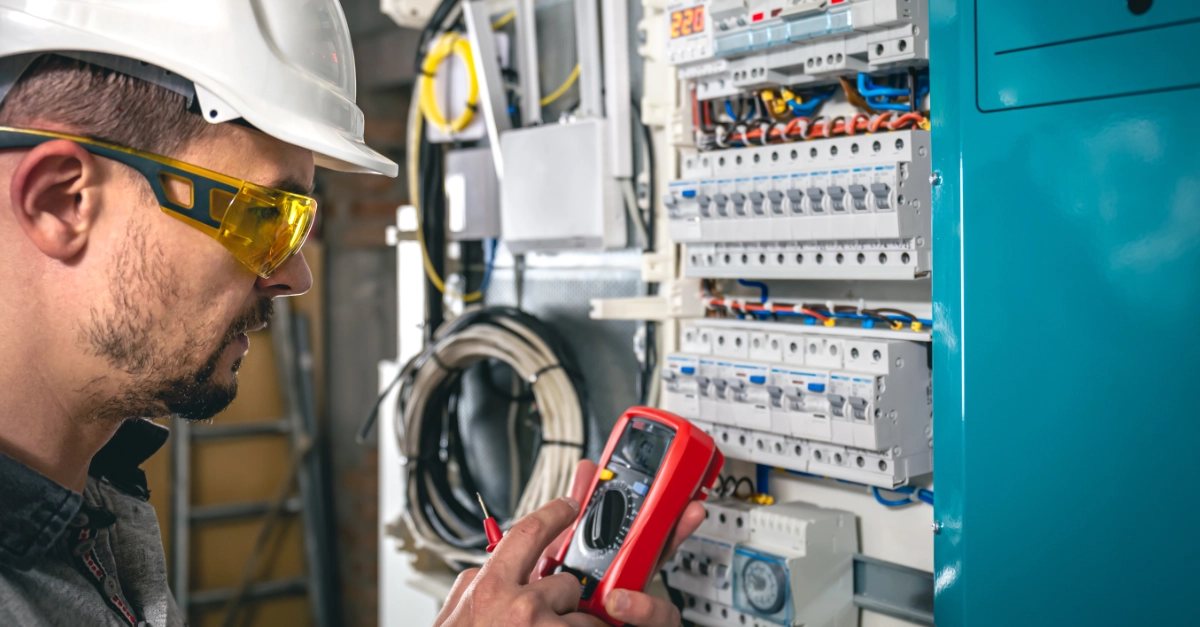
You’ve perfected your wireless product, and it’s ready to launch. Regulatory approval is the final hurdle standing between you and your customer. Clearing that hurdle requires a partner that understands complex and diverse regulatory landscapes around the world.
In North America, TCBs (in the U.S.) and FCBs (in Canada) help manufacturers avoid missteps and delays as they seek regulatory approval — and Industrial Inspection & Analysis (IIA) happens to be both.
What are TCBs & FCBs?
Most countries, including Canada and the United States, closely regulate the testing of digital devices, radiofrequency (RF)/radio devices, and products with integrated wireless technologies before they are imported, marketed and sold. Testing is required to ensure that new products will not interfere with other wireless devices or put health and safety at risk.
- UNITED STATES: In the U.S., most electrical devices must undergo testing and certification to ensure they meet Federal Communications Commission (FCC) requirements. The FCC recognizesaccredited, third-party organizations known as Telecommunication Certification Bodies (TCBs) to act on its behalf in issuing Grants of Equipment Authorization to manufacturers who fulfill all applicable requirements.
- CANADA: Most electrical devices made or sold in Canada must undergo testing and certification to ensure compliance with Innovation, Science and Economic Development (ISED) Canada Under the U.S.-Canada Mutual Recognition Agreement (MRA), ISED allows Foreign Certification Bodies (FCBs) that are accredited in their home country to issue approvals known as Type Acceptance Certificates on its behalf.
Products that require testing and certification in the U.S. and Canada include computer equipment, marine radars, electronic products, cellular boosters, wireless chargers, power adapters, Bluetooth® devices, WiFi routers, wireless medical telemetry transmitters, garage door openers, and many more.
As a recognized TCB and FCB, IIA reviews manufacturer applications, test results and other supporting documentation. If everything is compliant, IIA issues approval (a grant or certificate) on behalf of the governing agency.
Certifications vs. Grants
Certifications and grants are related but are not the same thing.
Certification is the regulatory process used to demonstrate that applicable radio equipment complies with the requirements for market access.
The outcome of that process is the regulatory authorization or certification that allows the product to be marketed in the applicable country.
In the U.S., equipment subject to FCC certification must receive an FCC Grant of Certification before it can be marketed in accordance with FCC requirements.
In Canada, radio equipment subject to ISED certification must receive an ISED certification (i.e. Certificate) and be entered in the Radio Equipment List (REL) before it can be manufactured, imported, distributed, leased, offered for sale, sold, installed, or used in Canada, subject to applicable ISED requirements and conditions.
For customers, the FCC grant in the U.S. and ISED certification/REL listing in Canada represent the regulatory authorization needed to bring applicable products to market.
Process Overview
Once a new product has been perfected, but prior to mass production, the certification process follows these general steps:
- The manufacturer has the device tested by an FCC or ISED accredited and recognized laboratory to determine whether it meets applicable regulatory requirements in the target market.
- The lab provides the manufacturer the resulting test reports that show the device’s compliance or non-compliance with applicable regulatory requirements.
- Depending on whether the product will be sold in the U.S. or Canada, the Applicant submits a certification application, along with the required test results and supporting documentation, to a TCB or FCB.
- The TCB/FCB reviews the application and supporting documentation to determine if all regulatory criteria have been met.
- If the product complies with all applicable requirements, the TCB will issue an FCC Grant of Certification on behalf of the FCC, allowingthe device to be marketed under the applicable FCC rules. For compliant, Canadian-bound products, an FCB will issue an ISED Certification (i.e. a certificate) on behalf of ISED Canada andsubmit the required information through SpectraWeb, ISED Canada’s online system. The submitted information is used by ISED Canada to create the corresponding REL entry. The ISED Canada Certification and Engineering Bureau may take approximately 5-10 business days to review the submitted information before the equipment is listed in the REL.
- The manufacturer can then proceed to market and sell the device in the target market(s).
Benefits of Using a TCB or FCB
In the fast-paced world of manufacturing, speed to market offers a key competitive advantage. TCBs and FCBs can often complete reviews and issue grants more quickly than the governing agency. (In addition, seeking approval directly from the governing agency, such as the FCC, may not be an option.) TCBs and FCBs also provide expert guidance on both technical and regulatory matters to help manufacturers avoid compliance issues and costly delays.
When TCBs/FCBs offer in-house testing capabilities in addition to certification services, the customer has a single point of contact for two critical functions, which streamlines the approval process.
Partnering with an FCB allows manufacturers to test and certify their product in their home country (or another country) without sending samples to Canada, saving time and money.
Our Full-Service Capabilities
As an FCC-recognized TCB and ISED Canada-recognized FCB, IIA reviews test results and supporting documentation and issues U.S. and Canadian certifications for many types of wireless devices. For manufacturers planning to market their products in both the United States and Canada, IIA can review and process and the applications concurrently. Because of the similarities between the applicable U.S. and Canadian requirements, this approach can streamline the certification process and help reduce overall time to market in both countries.
The global markets we serve include medical, scientific, consumer, automotive, commercial, telecommunications, military, wireless, marine, test and measurement, aerospace, lightning and lasers, information technology equipment, radio equipment and more.
Many labs only have testing capabilities, so they must outsource certification. IIA performs both testing and certification in-house. Partnering with a full-service test lab like IIA streamlines the testing and certification process for faster speed to market.
- TESTING: Our FloridaLab is an A2LA accredited test laboratory in accordance with ISO/IEC 17025:2017 for various test technologies. Our scope of accreditation (01) is recognized by the FCC and ISED to make a determination about applicable rules and to properly test to requirements and test methods.
- CERTIFICATION: Labs must be accredited under a different standard — ISO/IEC 17065:2012 (955.02) — to be able to certify devices. IIA’s scope of accreditation under the ISO/IEC 17065:2012 (02) standard allows IIA to certify equipment tested at our Florida EMC lab and at any FCC- and ISED-accredited and recognized test labs in the U.S. and in other countries.
IIA’s TCB Capabilities
As an FCC-recognized TCB, IIA can certify to the following FCC Standards/Requirements:
| Certification Scheme | Product Type / Category | Standards / Requirements |
|---|---|---|
| Federal Communication Commission (FCC) - TCB Roles and Responsibilities 1 | Unlicensed Radio Frequency Devices (Scope A) | Scope A1: Low power transmitters operating on frequencies below 1 GHz (with the exception of spread spectrum devices), emergency alert systems, unintentional radiators (e.g., personal computers and associated peripherals and TV Interface Devices), and consumer ISM devices subject to certification (e.g., microwave ovens, RF lighting, and other consumer ISM devices) |
| Scope A2: Low power transmitters operating on frequencies above 1 GHz, with the exception of spread spectrum devices | ||
| Scope A3: Unlicensed Personal Communications Service (PCS) Devices | ||
| Scope A4: Unlicensed National Information Infrastructure (U-NII) devices and low power transmitters using spread spectrum techniques |
| Certification Scheme | Product Type / Category | Standards / Requirements |
|---|---|---|
| Federal Communication Commission (FCC) - TCB Roles and Responsibilities 1 | Licensed Radio Service Equipment (Scope B) | Scope B1: Commercial Mobile (Radio) Services in 47 CFR Parts 20, 22 (cellular), 24, 25 (below 3 GHz), and 27 |
| Scope B2: General Mobile Radio Services in 47 CFR Parts 22 (non-cellular), 73, 74 (below 3 GHz), 90 (below 3 GHz), 95 (below 3 GHz), 97 (below 3 GHz), and 101 (below 3 GHz) | ||
| Scope B3: Maritime and Aviation Radio Services in 47 CFR Parts 80 and 87 | ||
| Scope B4: Microwave and Millimeter Wave Bands Radio Services and Citizens Broadband Radio Service in 47 CFR Parts 25, 30, 74, 90 (above 3 GHz), 95L, 95M, 96, 97 and 101 |
IIA’s FCB Capabilities
As an ISED Canada-recognized FCB, IIA can certify to the following Standards/Requirements:
| Certification Scheme | Product Type / Category | Standards / Requirements |
|---|---|---|
| Innovation Science and Economic Development Canada (ISED) 2 | License-Exempt Radio Frequency Devices (Radio Scope 1) |
Radio Scope 1 of the Radiocommunication and Broadcasting Equipment Scopes of Accreditation for Certification Bodies |
| Licensed Personal Mobile Radio Services (Radio Scope 2) |
Radio Scope 2 of the Radiocommunication and Broadcasting Equipment Scopes of Accreditation for Certification Bodies | |
| Licensed General Mobile & Fixed Radio Services (Radio Scope 3) |
Radio Scope 3 of the Radiocommunication and Broadcasting Equipment Scopes of Accreditation for Certification Bodies | |
| Licensed Maritime & Aviation Radio Services (Radio Scope 4) |
Radio Scope 4 of the Radiocommunication and Broadcasting Equipment Scopes of Accreditation for Certification Bodies | |
| Licensed Fixed Microwave Radio Services (Radio Scope 5) |
Radio Scope 5 of the Radiocommunication and Broadcasting Equipment Scopes of Accreditation for Certification Bodies | |
| Broadcasting Equipment (All Broadcasting Equipment Technical Standards (BETS) in the Category I Equipment Standards List) | Broadcasting Equipment Scope of the Radiocommunication and Broadcasting Equipment Scopes of Accreditation for Certification Bodies |


